

Weed. It divides opinion like nothing else on the bank. Carp absolutely love it — anglers? Not so much. But here’s the truth: if you can crack weedy lakes, you’ll catch more fish than the angler next to you who’s spending all day looking for the one bare spot on the lake. This guide covers everything you need to know about reading weed, presenting rigs within it, and — crucially — actually landing the fish once you’ve hooked one.

"Carp love weed - and you can catch them in it!"
Before we talk tactics, it helps to understand why carp are so drawn to weedy environments in the first place. Weed is essentially a carp’s version of a five-star hotel. It’s packed with natural food — snails, bloodworm, daphnia, shrimps — all living and breeding within the stems and leaves. It offers shelter from predators and, on bright days, carp will bask in the upper layers of weed soaking up the warmth.

"Carp are very used to finding food in the weed"
In other words, if there’s weed in your lake, that’s where the fish want to be. The angler who learns to fish it effectively gains an enormous edge over those who avoid it altogether.

Know Your Weed: The Two Main Types
Not all weed is the same, and the type you’re dealing with will dictate your approach.
Canadian Pondweed (or similar) is the one most anglers dread. It grows vertically off the bottom in tall, dense stands — sometimes reaching right to the surface. Presenting a rig cleanly inside Canadian weed is almost impossible, so the key here is to find the clear patches and channels that exist between the beds, not to fish in them directly.
 "Ripped strands of Canadian in the edge can be a good sign of feeding fish in the area"
Silkweed (or blanket weed) grows horizontally along the lakebed and, while it looks intimidating, it’s actually far easier to deal with. It’s stuffed with natural food and carp will spend hours routing through it. Better still, you can fish effectively over the top of silkweed with the right presentation — more on that shortly.

Finding Clear Spots: The Marker Rod Is Your Best Friend
The most reliable approach on a weedy lake is to locate the clear areas that exist close to or amongst the weedbeds. These spots are often naturally cleaner because the carp themselves have polished them up through repeated visits — and they’ll keep coming back. They also form natural patrol routes between weed beds.
To find them, you need a marker rod set up with a bare lead and braided mainline. A dedicated marker braid — like the Dancefloor Spod and Marker Braid — is ideal here because braid transmits bottom feedback to your rod tip with far more sensitivity than mono.

"A dedicated spod and marker rod is a useful tool when faced with weed"
Here’s how to read the bottom:
• Cast the lead out and let it settle. Note the feel as it hits bottom.
• Slowly pull the lead back towards you, feeling for changes in resistance.
• Bumping and knocking = gravel or stones — a great clear spot.
• Smooth, effortless gliding = firm silt or clay — also fishable.
• Lead sticks, resists or locks up = thick weed or deep, soft silt — approach with caution.
Once you’ve identified a promising area, pop your line in the distance clip, recast to confirm, then walk the line around a set of wrapping sticks to lock in the range. Always pick a skyline marker on the far bank so every cast lands in exactly the same spot.

When There’s No Clear Spot: Fishing Over the Top
Sometimes you won’t find a clear area — the weed is simply too widespread. In that case, don’t pack up and move. Instead, look for the lowest-lying, thinnest sections of weed and fish over the top of it.
Three presentations come into their own here:

"Some rigs present better in the weed than others"
Chod Rig
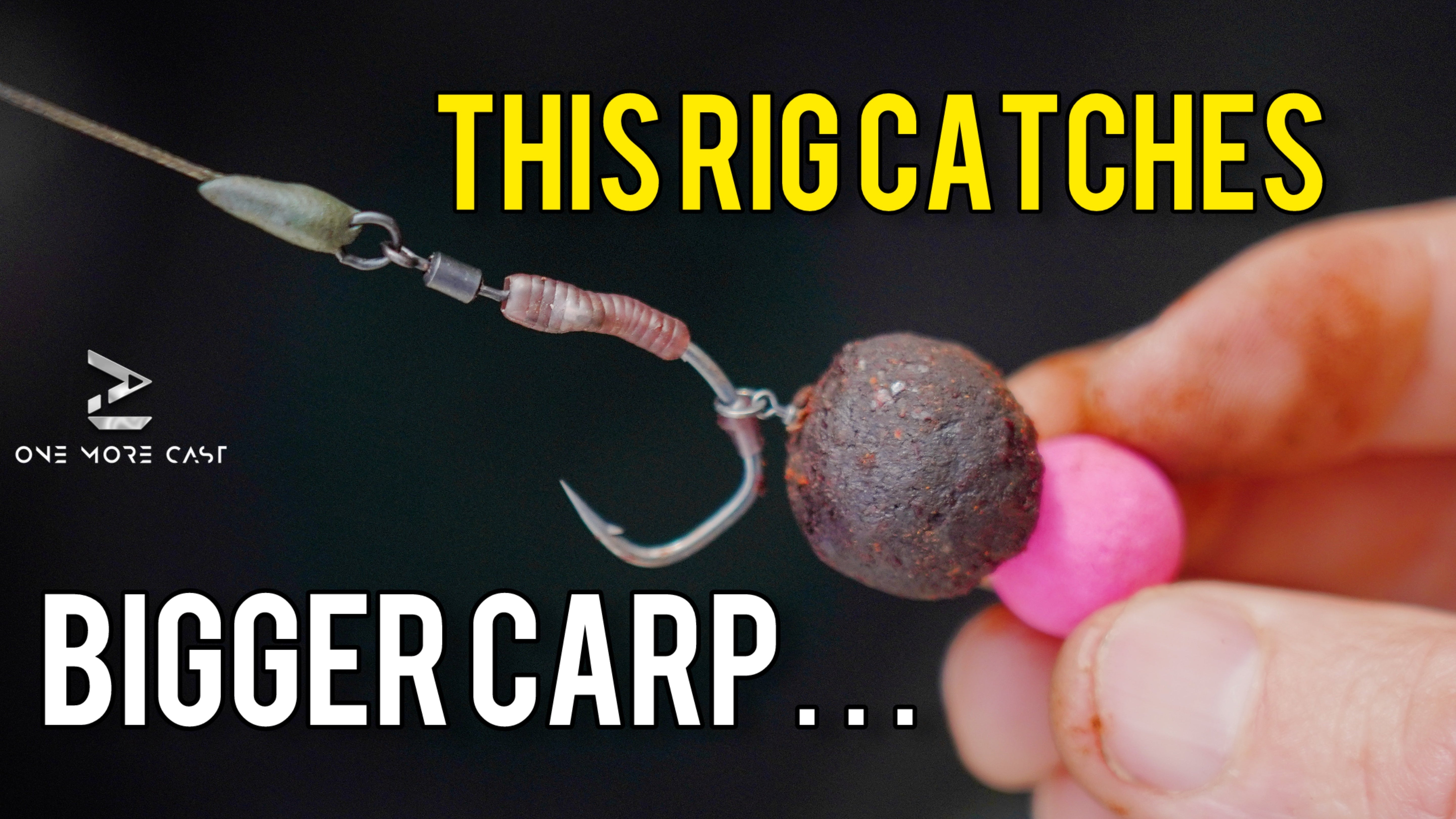
The Chod Rig was practically designed for weedy, silty, and unpredictable lakebeds. Set up with a small lead and a buoyant pop-up, the Chod Rig sinks slowly and settles over whatever’s on the bottom, with the hookbait always presented just above the lakebed and well within the feeding zone.
A top tip: spread whole and halved boilies around your Chod Rigs using a catapult. This gets fish used to picking up individual baits across the weed — exactly the situation your hookbait is mimicking.

"The Chod Rig sits reliably over just about anything"
Hinged Stiff Rig
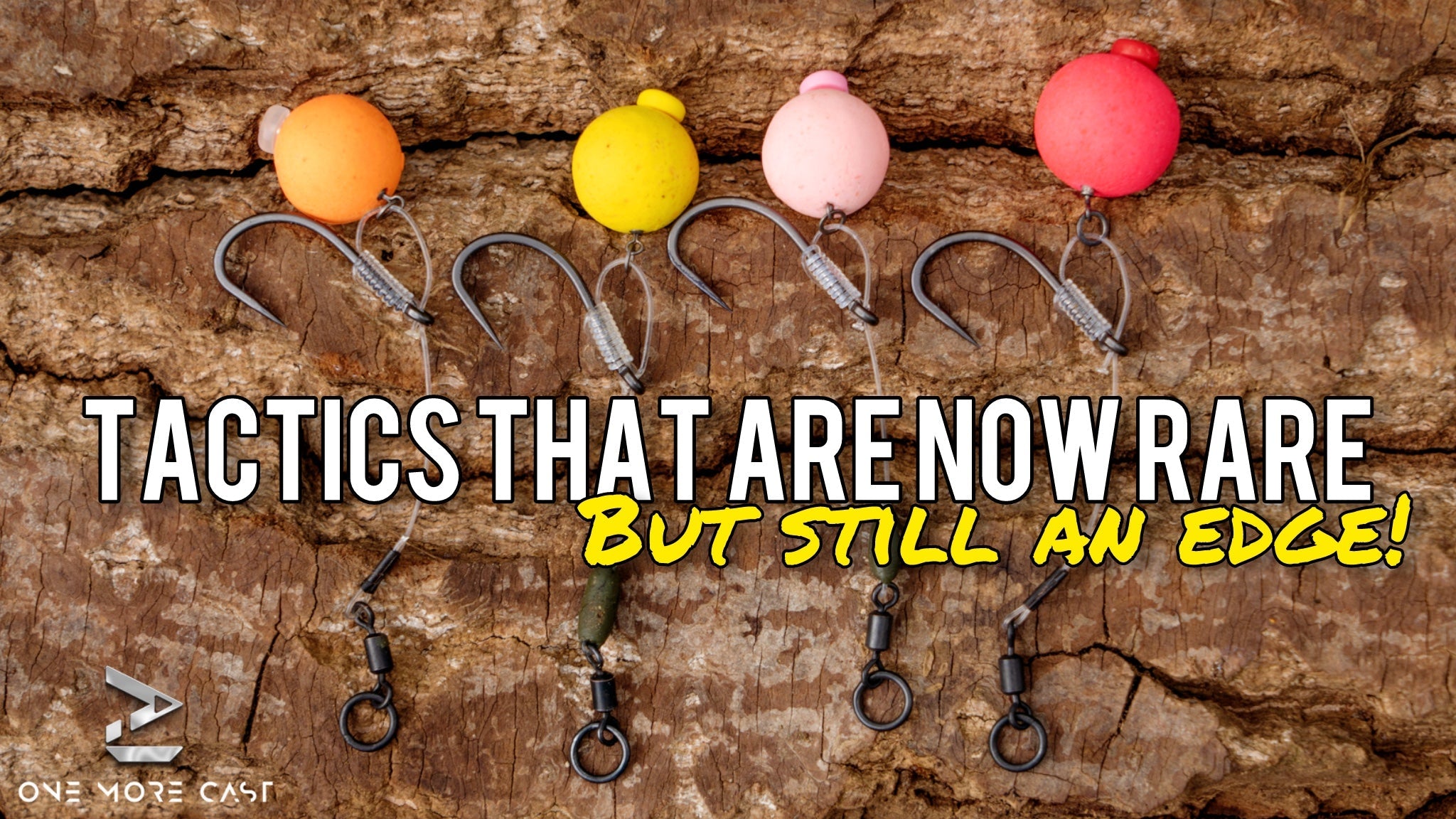
For slightly cleaner areas close to weed or over lower-lying weed, the Hinged Stiff Rig offers exceptional presentation. The stiff boom kicks the hooklink away from the lead and out of the danger zone, and the pop-up hookbait sits proud of anything below it.

"Not quite as 'cast anywhere' as the Chod, but still very good for weed - The Hinged Stiff Rig"
Solid PVA Bag
The Solid PVA Bag is one of the most underused edges in weed fishing. Packed tightly and cast to the spot, the bag acts as a parachute during the cast — protecting the rig as it falls through the water — before melting and leaving a neat pile of free offerings directly over your hook. In weedy swims, a well-packed Solid Bag will often push down into the surface of the weed and create the perfect feeding area. Tuck a small amount of crushed boilie or pellet in to keep it tight and tidy.

"Solid Bags tend to settle over or push through the weed"
Whichever presentation you choose, always use a pop-up hookbait when fishing over weed. Fishing a bottom bait risks the hook catching in weed before the fish even gets near it. A critically balanced or buoyant hookbait keeps the hookpoint clear and ready.
Adding a PVA Foam Nugget to the hookpoint is another simple trick that prevents weed and debris catching on the hook as the rig descends through the water column.

"Protect the hookpoint from the weed with dissolving PVA Foam"
Baiting Up in Weed: Keep It Accurate
Loose baiting around weedy spots is a different game to fishing open water. A Spomb or spod that lands three metres off your spot could leave freebies suspended in the weed at all levels — out of reach of feeding fish.
On weedy lakes, accuracy is everything. The one exception is when fishing Chod Rigs across a wider area — here, spreading bait around intentionally with a throwing stick or catapult can work in your favour, encouraging fish to feed across a larger zone.
For tight, pinpoint spots, stick to the catapult, bait boat, baiting pole or Spomb and only bait once you’re confident every piece is landing on the money.

Line Lay: The Detail That Costs Fish
Getting the rig in the right place is only half the battle. How your line lays between the rod tip and the spot can make the difference between landing fish and losing them.
In weedy swims, you don’t want your mainline sinking down between weed beds, creating a snag point before the fish even reaches the net. Two adjustments make a big difference:

Keep your rod tips high. Elevating your rods — particularly on butt rests with your tips pointing up — gives the line a better angle over the weedbeds and reduces the amount of line in contact with the lake bed.
Slightly slack line at the rod end allows line to settle naturally on top of the weed rather than cutting tightly through it. That said, don’t leave the clutch too loose — you need to be able to pick up the rod and apply pressure immediately on the take.

Playing Fish in Weed: Stay Calm, Stay in Control
You’ve got a bite. The fish has bolted and the line has gone solid. Now what?
Playing carp in weed is where many fish are lost, and most of the time it’s avoidable. Here’s how to approach it:
Don’t panic and don’t heave. If the fish has locked up in weed, pulling hard often causes the hook to pull free or the fish to weed itself deeper. Instead, apply slow, steady pressure and walk back from the water’s edge. Most of the time, this is enough for the fish to kick free on its own terms.

"Carp will find the weed and they will use it to their advantage"
If steady pressure doesn’t work, try the opposite. Completely slacken off the line and wait. Removing all tension often allows the fish to swim out of the weed naturally — a counter-intuitive tactic that works more often than you’d think.

"Slackening off can encourage the fish to swim out on its own"
Drop the lead. If you’re using a lead clip or inline lead that allows the lead to eject, do it. A leadless line in thick weed significantly reduces resistance and dramatically improves your chances of bringing the fish to the net.

"Fish your lead to drop-off - it will massively improve your chances"
Enlist a friend. Playing big fish out of dense weed is a two-person job on many occasions. You’ll often end up pulling in huge clumps of weed with the fish buried somewhere inside, and trying to net it alone while managing the rod is a recipe for disaster. If a mate is available, bring them in for the netting.

"Some help on the net when the fish is covered in weed can be useful"
If all else fails and rules allow — use a boat. Getting out over a stuck fish and coming at it from directly above changes the geometry entirely. It’s a last resort, but when a fish is completely locked down, it can be the difference between a capture and a lost fish.

"Changing the line angle by getting over the top of them can get them moving"
The Magic Wand: A Game-Changing Edge
One of the most significant recent developments for fishing weedy or snaggy venues has been the Magic Wand. This clever piece of kit creates a suspension effect that maintains pressure on the hookhold even after all tension has been released from the rod end — essentially keeping the hook in place during those critical moments when the line goes slack.
 "The Magic Wand adds a suspension effect to your lead system"
This is particularly valuable on barbless waters, where hooks are most likely to fall out the moment pressure is lost. On weedy venues where you’re regularly having to slacken off or manoeuvre around snags, the Magic Wand and NEW Magic Wand Inline Lead System can be the difference between a landed fish and a gutting loss at close range.

Tackle for Weedy Lakes: What You Actually Need
Weed fishing puts your gear under real pressure. This isn’t the place for light lines and fine-wire hooks — you need tackle built to handle the extra strain of dragging fish through dense weed, and to keep your rig presenting perfectly despite everything the lakebed throws at it.
Rods: You want a minimum of 3lb test curve. Anything lighter and you’ll struggle to apply the kind of pressure needed to bully fish out of weed before they lock up. The OMC Black Pearls are a serious option here — enough backbone to put fish on the back foot, with an action that won’t rip hooks when a carp kicks close in.

"Your rod has to be up to the job"
Mainline: Go heavy. 15lb as a minimum, and make sure it’s a high-abrasion resistant line — weed, gravel, and debris will put a lot of stress on your mainline during a fight and while the rig is sitting on the spot. The OMC Dancefloor Monofilament ticks both boxes, offering the abrasion resistance you need with enough suppleness to cast well and lay cleanly on the lakebed.

"Your line will take a beating - it needs to be able to handle it"
Braid: Worth having on a spare spool. In very heavy weed, braid will cut through where mono drags and bunches — and its zero-stretch properties mean you feel every knock and bump during a fight. The downside is that it’s banned on many venues, so always check the rules before spooling up. If it’s allowed, it’s a serious edge.
Leaders and Tubing: Protecting the section of line directly behind the lead is important in weedy swims. A short leadcore leader or rig tubing pins the line to the bottom close to the lead, reducing the chance of it lifting into weed and creating tangles or snag points when a fish runs.

"A leader or rig tubing behind the lead has many benefits"
Hooklinks: Thick fluorocarbon or braided hooklinks in heavier breaking strains are the way to go. Light, supple hooklinks are great for pressured open-water fishing but they’ll cause problems in weed — either catching on stems or not providing enough strength or rigidity to turn the hook. Coated braid stripped back at the hook end gives a good balance of rigidity, strength and movement.
Hooks: Go big. A size 4 as a minimum — in weed you need a hook that will find purchase quickly and hold firm through the kind of long, grinding battles that weedy lakes produce. Thin-wire hooks are out. You want a strong, reliable pattern that won’t flex or open under pressure.
 "Go big or go home with your hook sizes in weed"
The Mindset Shift That Changes Everything
The biggest barrier most anglers face on weedy lakes isn’t tackle, rigs, or even skill — it’s mindset. Too many anglers look at a weedy swim and see a problem. The angler who’s going to catch fish looks at exactly the same swim and sees opportunity.

"You'll catch more carp if you get confident around weed"
Weed means food. It means fish. And it means that wherever you find carp feeding confidently in or around weed, they’re catchable — often easier to catch than fish in open water where they’re warier and more pressured.
Find the fish, get a rig near them, and back yourself. The weed is your ally, not your enemy.

Journalist Chris Haydon joined the OMC Family in spring 2024 after six years working for the UK’s number one fishing publication, Angling Times. He is a keen coarse and carp angling all-rounder, fishing throughout the South West, including the famous Cotswold Water Park.
Share:
Zig Rigs: The Best Carp Method for Deep Venues | Ian Russell
What We Learned Underwater: Small Venue Holiday Carp Fishing | Grand Fishing Adventure Series 4 Episode 1 Review